Journal of Bioscience and Bioengineering Vol. 141 (2026)
Vol. 141 (January–June 2026)
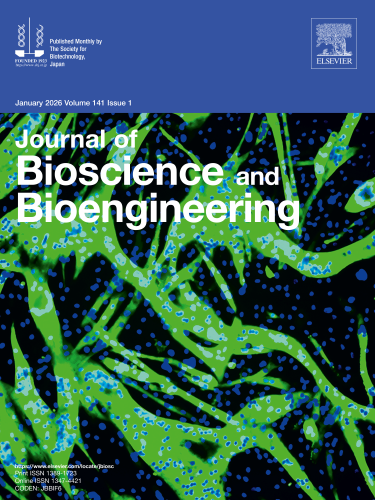
Bone morphogenetic protein (BMP) signaling has been identified as a negative regulator of skeletal muscle differentiation. However, conventional two-dimensional (2D) cultures of C2C12 myoblasts often fail to achieve sufficient maturation, limiting the utility of engineered muscle tissues. To address this, Ding et al. applied a scaffold-free, self-organization method combined with pharmacological inhibition of BMP signaling using dorsomorphin. This strategy enabled the formation of stable, ring-shaped three-dimensional (3D) muscle constructs even without exogenous scaffolds. In 2D culture, dorsomorphin treatment enhanced differentiation efficiency and induced myotube hypertrophy. In 3D constructs, it further promoted myogenic marker expression such as MyoD, myogenin, and M-cadherin, leading to greater myotube fusion and maturation. Functionally, BMP inhibition improved contractility, with inhibitor-treated constructs generating 2.75-fold stronger contraction compared to controls. Nevertheless, while contractile function was markedly enhanced, complete recapitulation of native skeletal muscle properties was not achieved. If culture strategies could be developed to reproduce additional aspects of in vivo muscle architecture and signaling environments, the value of these engineered constructs for drug testing, disease modeling, and regenerative applications would be greatly advanced.
For more information regarding this work, read the article: Ran Ding, Yuan Xi, Akira Ito, Kazunori Shimizu, Eiji Nagamori, Hideaki Fujita, Takuo Kawamoto, Masanobu Horie, “Bone morphogenetic protein signaling inhibitor improves differentiation and function of 3D muscle construct fabricated using C2C12”, J. Biosci. Bioeng., volume 137, issue 6, pages 480–486 (2024) (Copyright@2026 The Society for Biotechnology, Japan).
⇒JBBアーカイブ:Vol.107 (2009) ~最新号
⇒JBBアーカイブ:Vol. 93(2002)~Vol. 106(2008)



.gif)